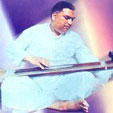
Sri Voleti Venkateswarulu (1928-1989) was a legendary Carnatic musician of extraordinary caliber and imagination who revolutionized the art form through his unique synthesis of Carnatic and Hindustani musical traditions. Known for his mellifluous voice, introspective approach, and creative genius, he drew knowledgeable audiences wherever he performed and left an indelible mark on Indian classical music.
Early Life and Musical Foundation
Born on 27th August 1928 in Rajahmundry, Andhra Pradesh, Voleti began his musical journey at the tender age of five. He received his initial training from Chaturvedula Achutaramaiah Sastry and achieved Swaragnanam under Munuganti Venkat Rao Pantulu of Kakinada. His first guru's unique training methodology included intensive raga immersion, where Voleti would sing constant repetitions of svara and akara for about eight months in a single raga like Kalyani, building an extraordinarily strong foundation.
Advanced Training and Artistic Development
He later graduated in music from Andhra University and polished his artistry under the legendary Dr. Sripada Pinakapani, who profoundly influenced his musical development. Dr. Pinakapani remarked that he was impressed by Voleti's musical knowledge and called him a genius, adding that "Voleti was one of the best musicians Andhra Pradesh has produced."
Unique Musical Style and Philosophy
Voleti was well-versed in both Carnatic and Hindustani musical systems, able to marry both traditions into a unique style that celebrated the grandeur of both forms without detracting from either. His approach to raga alapana was not merely a sketch of what a raga is, but rather a foray into what it could be. He was particularly fond of Hindustani music and would often conclude his concerts with Hindustani ragas presented as shlokas or bhajans.
All India Radio Contributions
Voleti worked as Program Producer at All India Radio, Vijayawada, where he brought innovative programs that became immensely popular. His creations included "Bhakti Ranjani," featuring songs tuned by him, and "Sangita Sikshana," a groundbreaking educational program where he directly taught songs to students on air, enabling listeners across the region to learn. Through Sangita Sikshana, started in February 1951, he taught approximately 200-300 compositions by various composers including the Trinity, Patnam Subramania Iyer, Poochi Srinivasa Iyengar, and Ponniah Pillai.
Concert Repertoire and Performance Style
His concerts featured a vast and varied repertoire including kritis of Tyagaraja, compositions by Muthuswami Dikshitar, Shyama Sastri, Patnam Subramania Iyer, and Tanjavur Ponnaiah Pillai. He also performed javalis, Kshetrayya padams, and Narayana Teertha tarangams. His raga alapanas and kriti renderings showcased his distinctive style and creative imagination. He was particularly fond of ragas like Begada, Varali, Ranjani, Hamsanandi, Hindolam, and Pantuvarali, though he masterfully presented the entire spectrum of Carnatic ragas.
Notable Accompanists and Collaborations
Voleti was frequently accompanied by legendary violinists including Lalgudi Jayaraman and M.S. Gopalakrishnan. His regular mridangam accompanists included Vellore Ramabhadran, Karaikudi Mani, and Dandamudi Rama Mohan Rao, with whom he was particularly happy to perform. He also collaborated with renowned musicians like Nedunuri Krishnamurthy, Vasundhara Devi, and Vinjamuri Lakshmi in various AIR programs.
Innovative Teaching and Musical Analysis
Voleti possessed unlimited svara gyanam (knowledge and mastery of svaras) and emphasized the importance of analysis over mere memorization. He advocated for singing sangatis leisurely to enjoy their nuances and adopting variations to make them one's own. His approach focused on achieving excellence in manodharma (improvisation) through introspection, analysis, imagination, and involvement.
Disciples and Musical Legacy
Though he had relatively few disciples, they included notable musicians like M.V. Ramanamurthy, N.C.V. Jagannatha Charyulu, Malladi Suri Babu, and Srirangam Gopalaratnam. Malladi Suri Babu, who was associated with Voleti for a long time at AIR Vijayawada, particularly imbibed Voleti's distinctive singing style and became a torchbearer of his musical tradition.
Musical Influences and Inspirations
Voleti held high regard for senior musicians including Ariyakudi Ramanuja Iyengar and Ustad Bade Gulam Ali Khan, whose pictures adorned his living room in Vijayawada. His introduction to Hindustani music came through Ustad Bismillah Khan, and he was deeply influenced by artists like Roshanara Begum, Ustad Amir Khan, and Pandit Pannalal Ghosh. He was particularly fascinated by the 'sruti pakkuvam' (adherence to pitch) in Hindustani music.
Personal Characteristics
Voleti was known for his contemplative nature before concerts and his unique preparation style - he never practiced for concerts in the conventional sense. Instead, he would be in a contemplative mood and often hum Hindustani ragas as warm-up before recording Carnatic ragas. Among his pastimes, watching movies held high priority, and he could invariably be found in a movie house when not performing. He was a simple man who breathed music 24 hours a day, caring little for honors and accolades.
Musical Philosophy and Approach
His musical ethos centered on "Saukhyam" (melody that is soulful, serene, and sublime), sruti and svara suddham (adherence to pitch and meticulous attention to note placement), and ultimately experiencing the joy of music. As his disciple noted, "Voleti does not sing for others; he tries to find happiness for himself first." This introspective approach to music-making became his signature and influenced generations of musicians.
Legacy and Recognition
Voleti Venkateswarulu passed away on December 29, 1989, leaving behind a rich legacy of musical innovation and artistic excellence. His unique synthesis of Carnatic and Hindustani traditions, his contributions to music education through radio, and his profound approach to raga exploration continue to inspire musicians and music lovers. He remains remembered as a musician who viewed music as a canvas to create rather than a finished painting to display, embodying the true spirit of artistic exploration and musical devotion.